
Making Instructional Change Stick: Scaling Rigor Across the District, Every Classroom, Every School, Every Day
Many districts have embraced Instructional Empowerment’s Model of Instruction and are seeing promising shifts in rigor, student thinking, and classroom engagement. Yet one of the greatest leadership challenges remains: how do you move from pockets of success to deep, systemwide implementation that lasts?
This 90-minute session is designed for district leaders who are actively implementing the IE Model of Instruction and are ready to scale their work across schools while maintaining quality and coherence. Grounded in implementation science and effective change management practices, this session will explore what it truly takes to move instructional transformation from initiative to institutional practice.
Participants will examine the leadership conditions, structures, and behaviors required to sustain instructional change over time. Using lessons learned from districts that have successfully scaled the IE Model, this session will highlight how leaders can build shared clarity around rigorous instruction, align principal supervision and central office supports, and use the Rigor Walk as a system-level feedback and learning tool.
Rather than focusing solely on training, this session will address how districts create cultures, systems, and accountability structures that support long-term instructional improvement. Leaders will leave with actionable strategies to strengthen implementation fidelity, build leadership capacity at every level, and ensure the IE Model of instruction becomes embedded in the daily work of teaching and learning across the system.

Dr. Michelle Fitzgerald
Michelle Fitzgerald, Ed.D., is the Executive Director of Networking and Advocacy at Instructional Empowerment, bringing over 30 years of experience in education. Her career spans a wide range of roles, including area superintendent, assistant superintendent, curriculum director, building administrator, and middle school teacher. Michelle has worked across diverse educational settings in three states, from suburban Chicago districts to the nation’s 7th largest school district in Tampa, Florida, and within fully urban districts. This variety has enriched her expertise in standards-based curriculum, best instructional practices, and data-driven assessment.
In her leadership roles, Michelle has been instrumental in developing instructional leadership among principals and assistant principals, focusing on building strong, data-informed systems that support impactful teaching and learning. Her commitment to instructional excellence led to significant gains in student achievement in several underperforming schools in Florida through close collaboration with instructional leadership teams, structured systems, and a clear focus on instructional quality.
Michelle holds a Bachelor’s in Elementary Education from Illinois State University, a Master’s in Educational Leadership from Aurora University, and a Doctorate in Curriculum and Instruction from Northern Illinois University. Her dissertation, Student Involvement in the Formative Assessment Process, reflects her dedication to empowering students as active participants in their own learning through data-driven approaches.
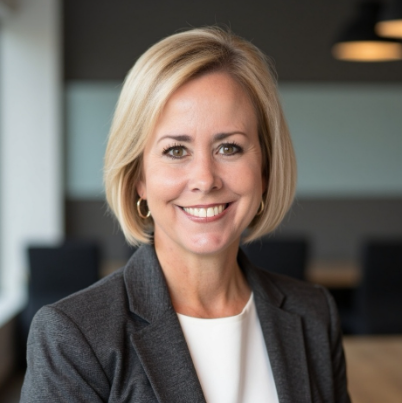
Tricia McManus
Session Details
Topics:
Grade Level: All
Audience: School Leaders, District Leaders
Difficulty Level: Novice/Intermediate